Episode 9: Neil Gower // Illustration and Typography

The Pleasure of Putting Pen to Paper

Neil Gower is an internationally acclaimed illustrator of books and maps. He started drawing at the age of eight and hasn’t stopped since.

Liquid error (blocks/_video_player line 26): invalid url input

Mr. Gower how long have you been using pen and paper? 
For as long as I can remember. As a child, I used to pretend I was ill, stay home from school and then I’d copy maps and try to hand-draw banknotes. That gave me a lot of pleasure. I know my mum worried about me.

What kind of pleasure?
(Laughing) I discovered that when I made certain things happen on the paper, when a certain combination of colours or lines appeared on the paper, it gave me a physical feeling in the centre of my body. The way I describe it is that it made my pelvis hum. I was only about eight at the time. It obviously wasn’t sexual at eight years old, but it was definitely a physical sensation, like a rush through my body.

And you still get that rush today?
Yes, the exciting thing is that it still happens now, probably once a week.

What a privilege!
Yes, it’s a privilege to be able to tap into that. My view as an adult has been that I’d do this until I needed to get a proper job.

When did you start realising that drawing could become a job?
Well, I’m still not convinced it has become a job. I mean, obviously it became a means of earning a living, bringing up children, having a mortgage and a house. But it felt more like a joke that got out of hand over many years.

"I love to feel the paint going onto the paper. I love to feel the resistance of the paper. It’s a very tactile, physical sensation."

Do you keep all your notes?

Every once in a while I get rid of some sketchbooks when there are simply too many of them. At the moment, I have eleven books at my workplace alone. However, it’s another story when I lose one or leave one somewhere. Then I sometimes mourn it for a week.

Why do you use so many notebooks at the same time?

Because I always need one, but often forget to put it in my bag. So I frequently buy new ones. And when I go on trips my sketchbooks are my companions. I don’t like eating in restaurants by myself, but I often have to do it when I’m travelling. So it helps me to have my book on the table and be drawing at the same time. The book gives me privacy, protects me from other people’s looks and lets me forget about the rest of the world. In that moment I am having a conversation with my thoughts and ideas.

How do you organise your thoughts: moodboards, lists, mindmaps?

(Laughs) Unfortunately I don’t have a system. And even though I always tell myself I’m going to devote a book to just one project, I can’t even manage to do that. I’m often quite disciplined on the first few pages, but then another project comes along and my resolution goes down the drain. Actually, the books are witnesses of my daily routine.

Do you have any writing rituals?

My most important ritual is writing down and sketching out my ideas at night. I often wake up at night with an idea that won’t let me go until I’ve got it down on paper. That’s why there is always a sketchbook on my bedside table.

Have you ever felt like switching to a tablet?
There was a moment, I think in the 1990s, where I did think I’m really going to have to change what I do. But I knew that it wasn’t for me. I just love the feeling of holding a pencil or a paintbrush in my hand. I love to feel the paint going onto the paper. I love to feel the resistance of the paper. It’s a very tactile, physical sensation. It is important to add though, I don’t think my way of working is in any sense superior to working digitally.

Many illustrators prefer the practicality of tablets.
And for the same reason I prefer paper. I love having to think ahead. See, the physicality of pen and paper gives you a certain sensation, it gives you information – but first and foremost with paper you must think so far ahead. You can’t just take a colour off, switch between layers or undo stuff. When you paint you work from light to dark, you build it up, slowly, layer by layer. And then you hope that you get the physical rush from the last colour going on.

Beside drawing and painting you write diaries and poetry. You do both by hand?
It starts off by hand. But I need to transfer it at some point, particularly when I’m writing poetry. On screen you see it in the form it’s going to be printed. Poems are about words, meanings and at the same time visual appearance. Editing a poem on a computer screen is like final sculpting, you’re chiselling away at the shape.

"As a child, I used to pretend I was ill, stay home from school and then I’d copy maps and try to hand-draw banknotes."
Your career has been spanning for more than 40 years. Do you find yourself thinking about retiring?
I could but why would I? I’m obviously, now my children are grown up, under less pressure to earn a lot of money. But when you’re not under pressure to earn money, you suddenly find yourself earning more money.

Why is that do you think?
I think that’s just bound to happen if you stick to doing something you like. When you’re young you take any job to earn money. Some jobs you have an aptitude for, others less so. But then the jobs for which you are better suited, will attract attention and if something’s done well, it generates more work. There’s a kind of natural evolution of gravitating towards your strengths. If you carry on doing what you like long enough, you move further and further into your field of expertise, you develop greater skills and you will develop unanticipated strengths. Anyway, that’s how it played out for me.

And you’ll get rushes of feeling good getting there.
(Laughs) Yes, and you’ll get a great sensation out of it, once or twice a week.

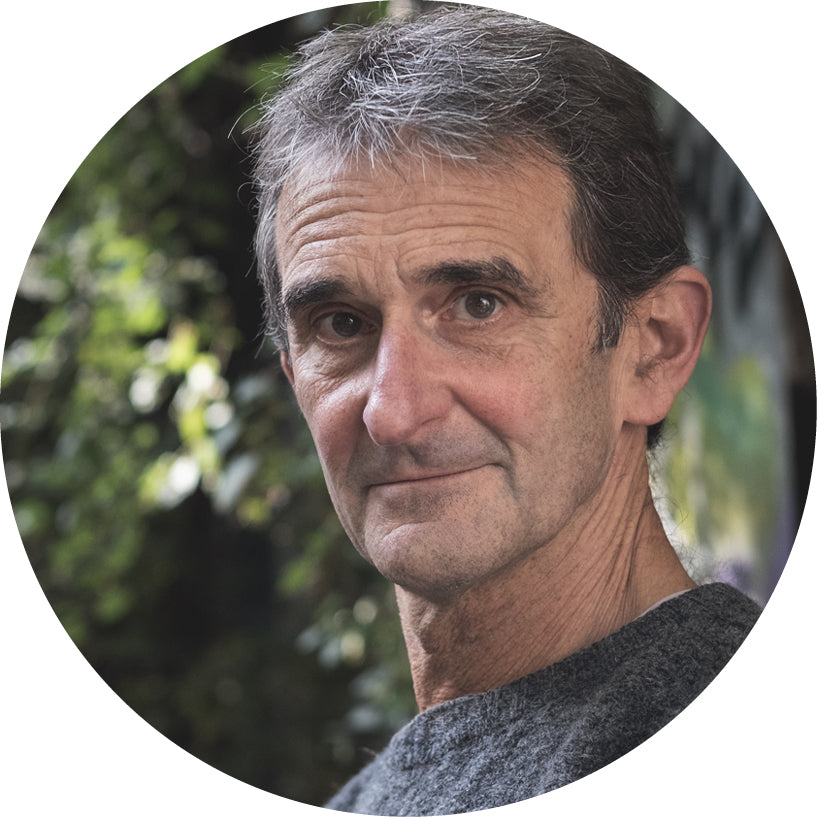
Neil Gower

Neil Gower is an internationally acclaimed graphic artist, best known for his book jackets (Bill Bryson, William Golding) and his literary cartography (Kazuo Ishiguro, Jilly Cooper, Simon Armitage). His work has been widely published in Europe and the US, including magazines such as The New Yorker, The Economist and Vanity Fair. He was Contributing Artist to Conde Nast Traveler in New York for 10 years. In 2017, he illustrated and co-authored As Kingfishers Catch Fire, a literary ornithology, with Alex Preston. His first collection of poetry Meet Me in Palermo was recently published by The Frogmore Press. He was born in Wales and now lives in Lewes, in the South of England and in Berlin.